
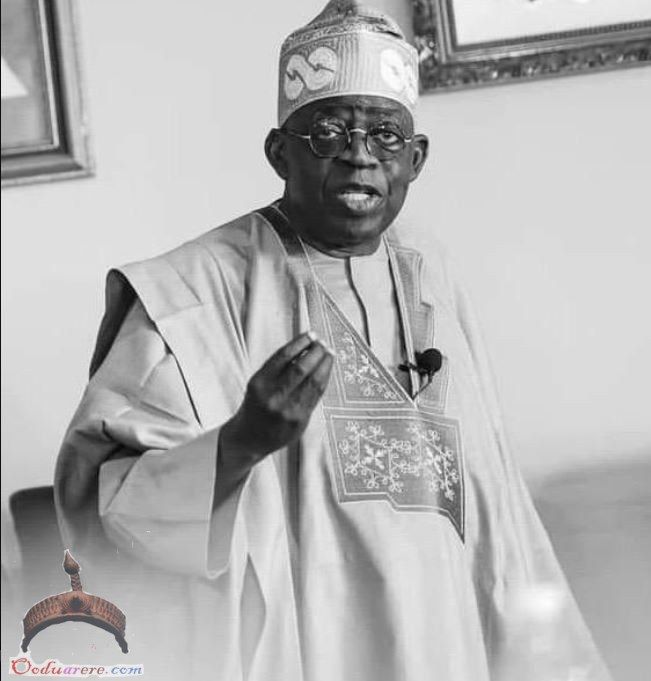
As President Bola Tinubu ups the ante in the management of the crisis of insecurity in our country, and as a public intellectual who has been offering free advice to authorities via this column for over three decades, one cannot help but take note of the fact that taming the monster of insecurity has become the priority of President Tinubu.
Some commentators have attributed the president’s current prioritization of security as a response to the United States of America, USA, President Donald Trump’s declaration of Nigeria as Country of Particular Concern, CPC, on October 31, due to his suspected persecution of Christians by those he tagged Islamist fundamentalists, an allegation that the Nigerian government has denied.
The designation of Nigeria as CPC might have necessitated the promotion of the fight against insecurity to the top of the files on Mr. Presidents to-do list but as it may be recalled Nigeria’s president and commander-in-chief of the armed forces of Nigeria had just returned from Rome where he went to attend a regional security meeting Aqaba, indicating that having made significant progress with fixing the economy through fundamental economic reforms— petrol subsidy removal and managed floating of the naira attention had been shifted to tackling insecurity.
But owing to a lack of proactive actions in diplomacy that could have helped to avert the sanction the CPC spectre fell on the country as the president was about to activate his agenda on how to fundamentally address the somewhat perennial insecurity crisis that has constituted itself into a fatal jeopardy.
Prior to the Aqaba conference in regional security, President Tinubu had charged the state governors who were not in harmony as to whether or not to adopt the policy of state police to forge a common front and they had all subsequently agreed that local policing as opposed to central policing was the most efficacious panacea to insecurity situation that was rapidly rising rather than abating in our beloved country.
So, in an uncanny way, it is coincidental that Nigeria got sanctioned by the US at the same time the administration was putting finishing touches to how it intended to prosecute its fight against the scourge of insecurity. So, both the initiative of President Trump to go ‘guns blazing’ into Nigeria to wipe out those he referred to as Islamic fundamentalists and President Tinubu’s resolve to defeat the insecurity crisis, having stabilized the economy after about two and half years of being at the helm of affairs in Aso Rock Villa, complement each other.
That is perhaps why it was not difficult for President Tinubu to accept collaborating with the US President Trump to engage frontally in the onslaught against those that he had referred to as Islamic fundamentalists when he declared Nigeria a CPC.
Thus, on December 25, President Trump did not go guns blazing as he had threatened, he went ‘bombs blazing’ by blasting suspected terrorists cells in Sokoto State axis with Tomahawk missiles.
The concern now is that, having been hit in their cell in Sokoto State by American hellfire, the targeted outlaws may be intent on changing their base. With Sahel nations of Niger Republic, Mali, Burkin Faso etc forming their own anti-terrorism security network to flush out the anti-social elements, it may be difficult if not impossible, for the fleeing terrorists to migrate into that region. As such, the area of least resistance, such as the North-East and North-Central Nigeria, and even the South-West, may become their next abode if they are not already ring fenced by security agents or cordoned off as it were.
Below is one of my articles in which concrete suggestions for safeguarding the country were advanced. It was written in April— some eight (8) months ago titled ‘Underscoring The Menace Of Insecurity In Nigeria: The Imperative Of CCTV’. In it, I set out strategic recommendations on addressing insecurity in Nigeria, relevant excerpts of which appear below.
“In the course of delivering a lecture at Al-Hakim University in Ilorin, Kwara State, on Thursday, April 17, the Inspector General of Police, IGP Kayode Egbetokun, PhD, implored Nigerians to acquire Closed-Circuit Television Cameras, CCTV, sets to be installed in their residences and places of work.
He argued that it is a part of the much vaunted, but yet to be implemented, community policing. My immediate reaction as soon as I read the news in the mass media was: Good idea, but how feasible is it? Has the idea been put through the crucible of critical thinking?
In any case, at least the IGP’s proposition marks a shift in the position of the police force, which has been opposed to the concept of state police. That is based on the presentation made by the IGP at the Nigerian Institute of Policy and Strategic Studies, NIPSS, in Kuru, near Jos, Plateau State capital.
In his presentation, the IGP had taken a position against the birthing of state police for the following reasons:
Although, in my view, the difference between the concept of state police and community police may be that the former will be controlled by the respective state governors while the latter will still be centrally controlled by the IGP in the Federal Capital Territory, FCT, Abuja, at least there is a consensus that the current framework of policing in Nigeria is inadequate. As such, there is a need for a paradigm shift.
I have, since the return of multi-party democracy in Nigeria in 1999, consistently advocated a state policing system. Although President Olusegun Obasanjo (1999-2007) was the first to moot it when criminality started rising around the country, which at that time was a reflection of the freedom that came with the nascent democratic rule after decades of military dictatorships, the idea has suffered a stillbirth 25 years after.
By the same token, I have wondered aloud why the police force, which is constitutionally charged with the responsibility of maintaining law and order internally, has been emasculated in the security architecture of our country.
Again, based on former Obasanjo’s military background as an ex-military head of state, it was a natural course of action for him to resort to the use of military force instead of the police force to curb internal insecurity.
As such, the police, which had been defunded and hobbled under by multiple military regimes so that it would not pose a threat to them in the course of the long period that Nigeria was under military jackboot, had been more or less rendered almost comatose.
Somehow, that military approach to enforcing internal security as opposed to the more appropriate, less military and non-kinetic method, of which the police are adept and more efficacious, has been sustained with a consequential deterioration of the level of security and safety of lives and properties in our country.
We will delve into the apparent usurpation of the role of the police in internal security by the military, whose responsibility is basically to defend our country against external threats.
But it has taken over the role of the police force and, in the process, has expended an estimated $16 billion between 2012 and 2018, even when Nigeria has not been at war against other countries.
Rather, our country has been faced with the menace of non-state actors in the form of religious insurgents exhibiting extremism, bandits initially engaged in cattle rustling, but have escalated to kidnapping for ransom. There is also the perennial farmers’ clashes with herdsmen whose animals are destroying crops, and the land grabbing schemes of the nomadic herdsmen worsened by a new strain of fortune seekers that are stirring up insecurity especially in areas where solid minerals abound. The agenda of this category of outlaws causes mayhem in particular locations so that they can illegally extract the assets after their targeted areas are made ungovernable.
While the reality is that it is the police that have the mandate and are therefore specifically trained to deal with the type of criminal activities wrecking our country, as highlighted above, the military has been executing the task of trying to maintain peace, which it is ill-equipped to handle. In my view, that is one of the key reasons that the marauders have been having the upper hand, and the state of insecurity in Nigeria has been on an upward trend.
For instance, while N6.11 trillion has been allocated to the Ministry of Defense in the 2025 budget of N49.74 trillion, N1.1 trillion was provided for the Ministry of Police Affairs. So, while the military is getting an elephant-sized allocation, the police have been given an ant-size funds in the 2025 budget.
One is, however, not oblivious of the fact that the Ministry of Defense covers the army, air force, and the navy with its budget of N6.11 billion. Nonetheless, internal security falls within the purview of the police, so it should have gotten the lion’s share of funds devoted towards keeping Nigerians and their properties safe and secure.
Before going into further details about the non-prioritization of funding of the police to take charge of internal security and instead placing emphasis on funding the military which has received the highest allocation in the yearly budgets in the past 25 years, lets first examine the IGP’s proposition for Nigerians to acquire CCTVs as part of his concept of community policing and citizen’s contributions towards helping stem the crisis of insecurity which has assumed an alarming proportion in our beloved country.
For sure, the idea of Nigerians acquiring CCTV is quite laudable. In fact, the cities of London, Dubai, and New York are known to be practically forests of CCTV cameras, which have been efficacious in crime control. But from the point of view of affordability to Nigerians, it is very expensive to acquire and operate. As such, it may be a difficult expectation. The challenge is especially made worse due to a lack of a steady supply of electricity, which has been plaguing our country.
So, to make CCTV affordable to the average Nigerian, at the initial instance, the Federal Government of Nigeria, FGN, should remove the duty on it imports. Subsequently, it should provide funding support for a couple of firms to start assembling it here so that it will be cheaper. But imports should not be allowed to go on beyond 18-24 months before the items are locally assembled.
To boost local assembling of the items, there has to be a sort of government support scheme to empower the same firms assembling CCTV cameras to locally assemble solar power panels and drones as part of the package with the CCTV. They should also assemble electricity meters, PoS machines, and ATMs via the import of Completely Knocked Downd, CKDs, that will be assembled here by the Nigerian workforce.
The production of these items is not rocket science, so private firms could set up Joint Ventures, JVs, with European, north and south American, or Asian firms, including the Chinese, Korean, and Indian manufacturers.
The government’s support through any type of subsidy-equity investment through the Ministry of Finance Incorporated (MoI), offer of tax holiday, custom duty exemption, etc., must be guaranteed.
In the same breath, the newly set up CreditCorp will be mandated to give Nigerians credit to acquire the CCTVs and solar panels assembled in Nigeria, thus creating jobs for the unemployed.
With a population of 220 million, Nigerians are large enough in number to justify the local production. Having said that, one fact that must not be ignored is that by the IGP’s proposition that citizens should acquire CCTV, the responsibility of monitoring crime to proactively prevent it or track criminals after committing a crime, which is the duty of the government, is being shifted to citizens. But it may be for a good reason because it has been proven that public funds advanced to citizens as investments have a better chance of being recouped or the value being realized.
As it may be recalled, in 2012 or thereabout, to improve the security architecture in Nigeria, a contract was awarded to ZTE Corporation of China for a sum of $470 million for the installation of 2,000 CCTV digital solar-powered cameras.
As the House of Representatives committee that investigated the contract found out, after collecting $100 million upfront payment, the project was abandoned by the contractor, who only installed 40 cameras, most of which have remained dysfunctional.
Based on the findings of the committee, the project was a monumental failure, as they cited corruption and mismanagement as the factors responsible for the scandalous outcome of the initiative to monitor and nip crime in the bud in Nigeria’s commercial nerve center, Lagos, and Abuja, the nation’s capital.
So, it is perhaps a tribute to the creative ingenuity of the IGP that he is trying to circumvent the well-known corruption associated with government contracts by proposing that CCTV camera ownership should be pivoted to citizens, and I am adding that the acquisition should be supported by the government.
Imagine if the $470 million set aside to pay the contractor ZTE in 2012 was used to subsidize the acquisition of CCTV cameras by individuals in the model that IGP Egbetokun has proposed, and which I have provided a framework for?
If the above approach is introduced, the current alarming rate of insecurity would have been reduced, as criminals would have no hiding place. Incidentally, the same scourge of corruption that scuttled the deployment of CCTV cameras in Abuja and Lagos has defined the military’s kinetic approach to combating insecurity in our country, which is in its 25th year.
In the 2014 national appropriation law, about $2.4 million was allocated for managing security under the watch of Col. Sambo Dasuki as National Security Adviser, NSA.
Upon the defeat of Goodluck Jonathan and the PDP administration in 2015 and the takeover of government by Muhammadu Buhari and APC, it was alleged that the funds budgeted for security were misappropriated or diverted into funding the 2015 election.
At this juncture, it is important that we dig into how insecurity started and degenerated into its current horrible situation. It all started as a religious insurgency after Sharia law (a legal and moral code based on Islamic principles, governing various aspects of life for Muslims) was introduced in Zamfara State during Obasanjo’s watch in 1999.
The religious extremism underscoring the adoption of the law later got hijacked and converted into a cover for criminality. Curiously, since that time, the rare earth minerals-rich state has consistently and notoriously been the foremost theatre of insecurity in our country. Arising from the above, it is my view that another reason that insecurity is still thriving in Nigeria is religion.
That is because some of those who have been perpetrating dastardly crimes have been using the subterfuge of Jihad, which, commendably, some Islamic clerics have been debunking and distancing the real devotees of the Islamic faith from the criminal elements who have been decimating both Christians and Muslims without exception.
As soon as those hiding under the cloak of religion to perpetrate the heinous crime that borders on genocide and ethnic cleansing are exposed and fished out, our security agencies will succeed in achieving a return to peace and security in our country. Alongside religion, there is also the external factor in the rising spate of insecurity.
This involves those who are after our rare earth minerals in the states where they are endemic. They are the ones funding criminality to make the area ungovernable, during which they can carry out their nefarious activities. They started it in the natural resources-rich Zamfara State, and they have now shifted attention to the Plateau for the huge deposit of lithium, etc., in that state.
One thing that is clear is that it is the same playbook that the criminals have been using in the Democratic Republic of Congo, DRC, for about 100 years that they are deploying in Nigeria. Strikingly, what is happening in Darfur, South Sudan, which has been defined by armed conflicts driven by external factors interested in the fossil fuel resources in that geographical location for over five (5) decades and counting, is not dissimilar:
Owing to the fact that there is a gap in policing in our country, foreigners are running around without inhibitions in our hinterlands, mapping out our resources, and in some cases, we have seen trending videos of foreigners handing out cash to our police men, presumably in compensation for favors.
In climes that are more security-conscious, foreigners are not allowed to travel into the hinterlands, contesting resources with locals. But in Nigeria, foreigners abound in our forests and solid mineral sites, extracting and carting away our natural resources under the radar. At a point in time, small propeller airplanes were landing in narrow paths in Zamfara State and carting away precious stones to unknown destinations for processing. They did so allegedly in connivance with our security forces.
Apart from being assigned to carry out protection services for public officers and Very Important Personalities, VIPs, there are even instances whereby men/ women of the police force are giving protection to people of suspicious character (who they should be apprehending) as they intimidate with overbearing sirens and vehicle convoys vulnerable members of society going about their daily chores of trying to eke out a living.
With a paltry number of police personnel, about 400,000 in a country with a population estimated to be roughly 220 million, and so many officers/men engaged in official and unofficial VIP protection services, there are not enough to be retained in the locations where marauders have struck. Hence, there have been cases of the bandits returning to the location that they attacked a few days or weeks after to inflict more harm on unprotected victims.
One cannot phantom why the operationalization of the state/community police system is still in abeyance and why the police are still not being well funded. We have a youth bulge in our country, and I do not see why the authorities have not embarked on a massive recruitment of our youths into the police force to occupy the hinterlands and ward off the marauders. We also need forest police, a concept which Solid Minerals Minister, Dr. Dele Alake, had mooted some time ago. They will be needed to police the forests and protect our natural resources, which are the target of the criminal elements sponsoring those inducing conflicts and violence in targeted locations rich in natural resources. Apart from the regular police force, I even think that it is about time to reintroduce the National Guard security force, earlier set up by Gen. Ibrahim Babangida as an elite police force to manage the evolving security situation in our country.
The sad events in Plateau State, where lots of blood have been shed in a space of two weeks, are really out of order and a pointer to how much worse the security situation in our country has become. I think that one of the reasons insecurity is still thriving in Nigeria is religion.
As soon as those hiding under the cloak of religion to perpetrate the heinous crime that borders on genocide and ethnic cleansing are fished out, our security agencies will succeed in achieving a return to peaceful and harmonious co-existence of the multiple ethnic groups in our country.
Remarkably, the external factor in the rising spate of insecurity is real, and it has not been addressed frontally. We must accept the reality that those elements who want our rare earth minerals in Plateau State are funding criminality to make the area ungovernable, during which they can carry out their nefarious activities.
They did this in the natural resources-rich Zamfara State, and they have now shifted attention to the Plateau for the lithium, etc. It is the same playbook they have been using in the Democratic Republic of Congo, DRC, for about 100 years. What happened in Darfur, South Sudan, is not dissimilar.
Let’s do some recollections about the timeline and death toll arising from recent violent attacks by armed invaders in Zamfara, Benue, and Plateau states. In April 2025, bandits attacked Tsafe LGA, killing a vigilante and setting vehicles ablaze.
Another attack occurred in Rijiya village, where bandits killed eight people and set a school ablaze.
In March 2025, four (4) attackers were killed after Operation Fansar Yanma troops repelled a terrorist attack on Mada town in Gusau Local Government Area. The attack was reportedly in retaliation for the death of a local kingpin.
In February 2025, bandits attacked a community in Zamfara, killing one person and abducting two others, including a resident’s wife and neighbor. Earlier, in December 2024, suspected bandits planted explosives along a road in the Maru Local Government Area, killing six people and injuring eight others when a vehicle ran over the bomb.
Bandits had also launched attacks multiple times on several villages in Zamfara State, including Rukumawa village, where they set houses ablaze and rustled cattle.
The morbid tale of woe is not different in Benue State. In February 2025, the attack on Yaav and Mbadura wards of the Turan community, Kwande LGA, left 38 people dead. Also, 16 people were killed in Gwer East LGA in March 2024. Another 30 got killed in Katsina-Ala and Logo LGAs in November 2024. Also, 11 lives were taken in the Otobi community in April 2025 in Otobi community, Otukpo Local Government Area.
Similarly, the marauders have turned Plateau State into a killing field. Ranging from the December 2023 attack, when the death toll was estimated to be around 195 people, with 148 lives cut short in Bokkos, 19 in Mangu, and 27 in Barkin Ladi LGAs. Other reports suggested the death toll could be over 200. In this month, April 2025, in the town of Bokkos, a death toll of 52 people was recorded when the murderers returned to attack the same community.
Although the Nigerian military has been working to combat these attacks, with some successes in repelling bandits and neutralizing notorious leaders, the situation remains dire, with many residents living in fear of bandit attacks as the government seems to be too far away from citizens in the far flung insecurity prone areas.
In light of the human carnage being recorded, there is a gap in policing in our country. And I cannot phantom why the operationalization of the state/community policing system is still in abeyance and why the police are still not being well funded.
We are blessed with a youth bulge in our country, and a high level of unemployment exists.
So why are our leaders not taking advantage of these positive and strong factors by harnessing them via engaging and upskilling our unemployed youths into becoming productive contributors to our economy as law enforcement personnel?
In light of the above, I do not understand why the authorities have not embarked on a massive recruitment of our youth population into the police force, equipping them with cutting-edge skills and arming them with high-technology weapons and devices to occupy the hinterlands and ward off the marauders.
We also need forest police, which is an idea that Solid Minerals Minister, Dele Alake, had mooted some time ago as part of his plans to police the forests and protect our natural resources, which are the targets of the criminal elements/syndicates.
Apart from the regular police force, I dare to add that it is about time Nigeria reintroduces the National Guard, which is a security force earlier set up by Gen. Ibrahim Babangida as an elite police force to manage the evolving security situation in our country.”
Having made the case above for forest guards about 8 months ago, it was pleasing to me to learn that President Tinubu has finally ended the speculation on whether the forest guards’ initiative will become a reality or not as it finally got activated as part of the activities that he performed before the end of year 2025.
Hopefully, the 1,129 forests across Nigeria largely occupied by the outlaws currently under siege from American weapons will be reoccupied by the 130,000 armed guards (each state to contribute between 2000 to 5000 men) to secure our hinterlands that have been literally taken over by the heartless and reckless marauders that have turned our beloved country into a killing field.
Hopefully, other measures proposed in my intervention such as the introduction of the National Guard initiative would be considered by President Tinubu in the near future by taking full advantage of the renewed cordial relationship between Nigeria and the US to seek assistance with setting up the national guard modeled after the US one.
That should not be difficult as Nigerian constitution and governance system that are anchored on the presidential system of democracy is modeled after the US one.