
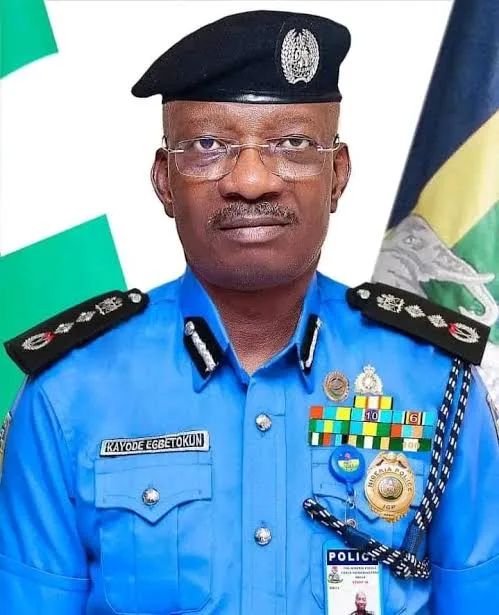
The exit of Kayode Egbetokun as Inspector General of Police (IGP) came as a surprise to many Nigerians—but not to activist Omoyele Sowore, who had repeatedly argued that Egbetokun had reached the statutory retirement age of 60 years or 35 years in service and should step aside to allow succession within the police hierarchy.
For years, the extension of service for top public officers has rested squarely on presidential discretion. Successive administrations have exercised this power, often creating bottlenecks at the upper ranks of the military and law enforcement agencies. The result has been institutional stagnation, career blockages, and the forced retirement of senior officers whenever a junior is elevated to head a service.
Under long-standing convention, when a junior officer is appointed as service chief—whether in the Army, Air Force, Navy, Police, Customs, or Immigration—those senior to the appointee must retire. The ripple effects can be extensive, eroding experience, and disrupting continuity.
Although Egbetokun’s tenure had earlier been extended by President Bola Tinubu, his eventual replacement reportedly placed about half a dozen Deputy Inspectors General (DIGs) and nearly 30 Assistant Inspectors General (AIGs)—all senior to the acting IGP—at risk of compulsory retirement.
In a significant departure from precedent, President Tinubu has reportedly suspended the retirement of the affected officers. If sustained, this move signals a structural shift in how leadership transitions are managed within Nigeria’s security architecture.
Beyond the police hierarchy, the decision may carry broader implications. It suggests an effort to correct systemic distortions that have long plagued the armed services—where promotions at the top often trigger avoidable institutional losses below.
This development aligns with Tinubu’s reformist posture under his “Renewed Hope” agenda. His administration’s economic reforms—most notably the removal of fuel subsidies and the managed float of the naira—initially triggered inflation and hardship. Yet early indicators suggest stabilization: fuel queues have eased, and manufacturers are no longer scrambling desperately for foreign exchange to sustain production.
If the reform of succession protocols in the police proves durable, Egbetokun’s exit may be remembered not merely as a routine leadership change, but as a turning point—one that removes a lingering structural barrier to deeper security reforms, including the long-debated prospect of state police.
Evidence that hardship is easing can be seen in the decline of inflation from a peak of 34 percent about a year ago to 15.10 percent currently. In addition, Nigeria’s foreign exchange reserves held by the Central Bank of Nigeria (CBN) have risen to nearly $50 billion as of February—an amount sufficient to cover more than a year of imports.
I deliberately revisited President Bola Tinubu’s sweeping economic and social reforms, including the initial hardship they triggered, to underscore a pattern: his reforms rarely appear pleasant in the short term. They often provoke skepticism and resistance at inception. Yet, over time, their benefits begin to manifest—as seen with petroleum prices, which initially surged following subsidy removal before gradually stabilizing.
A similar dynamic appears to be unfolding in the security sector. Tinubu’s shift away from an overreliance on kinetic military force toward a more intelligence-driven, non-kinetic approach may seem counterintuitive to citizens traumatized by the atrocities of criminal gangs, particularly in the North-East and Middle Belt. However, addressing insecurity at its roots—through intelligence gathering, law enforcement restructuring, and community-based policing—arguably offers a more sustainable solution.
This may explain the restructuring within the police hierarchy, including the removal of Kayode Egbetokun and the appointment of Tunji Disu as his replacement. Notably, both men previously served as Tinubu’s aides-de-camp during his tenure as Governor of Lagos State. Critics have seized on this to allege ethnic favoritism. Yet, in matters of national security reform, trust and proven working relationships are not insignificant considerations. Still, that alone does not tell the full story.
On Christmas Day, the U.S. military reportedly collaborated with Nigerian forces to strike suspected terrorist camps. Anticipating that surviving elements would disperse, security agencies could have proactively established containment perimeters to prevent their migration. Instead, these groups appear to have relocated to parts of the Middle Belt, where they have unleashed deadly violence, claiming hundreds of innocent lives.
This reactive posture reflects a preventable security lapse. Containment and local intelligence coordination—functions better suited to decentralized policing structures—might have limited the spread. The long-standing debate over state police becomes relevant here.
State policing has been discussed as a viable solution since the administration of Olusegun Obasanjo in 1999. Yet, like fuel subsidy removal and currency reform—ideas once contemplated under Ibrahim Babangida decades ago—successive governments hesitated. It was not until May 29, 2023, during his inauguration that Tinubu formally ended the fuel subsidy.
It was therefore unsurprising when, during a Ramadan iftar with governors, Tinubu declared that the establishment of state police was central to curbing insecurity and urged subnational leaders to prepare. Coincidentally, that was the same day Egbetokun was replaced.
Days later, at an interfaith breaking of fast, Tinubu reinforced his position, urging senators to amend the 1999 Constitution to formally incorporate state policing as Nigeria’s standard internal security framework He stated:
“We are facing terrorism, banditry, and insurgency. But we will never fail to respond appropriately. I urge you to begin considering constitutional amendments to incorporate state police so we can secure our country, reclaim our forests from marauders, and free our children from fear.”
Taking together—placing governors on notice, urging constitutional reform, and restructuring police leadership—these actions underscore Tinubu’s determination to recalibrate Nigeria’s security architecture. His objective appears clear: to restore order in a nation besieged by insurgents, bandits, kidnappers, and violent criminal networks that have turned rural communities into killing fields.
One profound consequence of this insecurity has been worsening food insecurity—disruptions reminiscent only of past climate-induced famines. Without security, economic reforms can not fully translate into prosperity. The success of Tinubu’s broader reform agenda may, therefore, hinge on whether his security recalibration, including the long-debated introduction of state police, finally materializes.
The new IGP and the broader policing architecture that President Bola Tinubu intends to establish under his reform agenda signal an apparent pivot in his hierarchy of priorities—from economic stabilization to the security and safety of lives.
Tinubu has also intervened uniquely to prevent the loss of institutional memory that would have resulted from the compulsory retirement of about 30 senior police officers ranked above Tunji Disu, whom he recently appointed as acting Inspector General of Police. In a swift directive to the Police Service Commission, the President reportedly halted the planned retirements.
“Several of the senior officers have had their hopes rekindled after the Police Service Commission, which had compiled 30 names for retirement, was asked to suspend the process.”
Although it remains unclear what the President ultimately intends to do regarding those officers—given that past conventions typically required their retirement—his decision departs from tradition. Notably, the new acting IGP is reportedly set to turn 60 in April, the statutory retirement age, raising further questions about how these transitions will be managed under the evolving reform framework.
For now, Nigerians concerned about insecurity await clarity as Tinubu’s broader security and policing reforms unfold.
Meanwhile, rumors have circulated alleging that Kayode Egbetokun’s exit was linked to a purported transfer of ₦100 million into the bank account of his son by the Anambra State Government. Although the incident has been described officially as a banking error, skeptics remain unconvinced, suspecting a possible cover-up. Authorities, however, maintain that investigators have found no evidence of fraudulent intent and attribute the transfer to clerical error.
What is clear is that Egbetokun—widely perceived as cautious about the introduction of state police—has now yielded his position to Tunji Disu, who is not known to oppose decentralization. For advocates of state policing, this represents a significant development. For years, many—including this writer—have argued that state police constitute one of the most accessible remedies to Nigeria’s deepening insecurity, which, if left unchecked, could destabilize the federation.
Tinubu’s track record suggests that his reform decisions are often unconventional and initially uncomfortable. His removal of fuel subsidies ensured a steady petroleum supply. The emergence of the Dangote Refinery and other modular refineries has strengthened domestic capacity. The managed float of the naira has ended chronic foreign exchange scarcity, with reserves at the Central Bank of Nigeria now exceeding $50 billion—the highest level in roughly a decade. The Nigerian Exchange (NGX) has similarly recorded robust performance, reflecting renewed investor confidence.
It appears that consolidating these economic gains now requires prioritizing security. A safe and stable environment—alongside a reliable electricity supply, another sector undergoing reform—is indispensable for industrialization. Without security, economic reforms can not yield sustainable prosperity.
In this context, Tinubu’s renewed commitment to establishing state police forms part of his broader reform agenda under the “Renewed Hope” banner.
Support for the constitutional amendment is gathering momentum. Professor Itsay Sagay, former chairman of the Presidential Advisory Committee Against Corruption, has expressed optimism that the 1999 Constitution can be amended swiftly to accommodate state police.
“Now that virtually all 36 state governors are reportedly on board and willing to invest in the process, there should be no obstacle in securing approval from the State Houses of Assembly. After all, only a majority is required, not unanimity.”
Similarly, Senate spokesperson Yemi Adaramodu has reaffirmed the upper chamber’s readiness to expedite the amendment process.
“We are going to treat the matter expeditiously and conclude it before electioneering begins.”
Nevertheless, concerns persist. Critics emphasize the need for safeguards to prevent abuse by state governors—one of the reasons the proposal has remained dormant since it was first seriously debated under former President Olusegun Obasanjo in 1999.
The pan-Yoruba socio-cultural organization Afenifere and the Miyetti Allah Cattle Breeders Association of Nigeria (MACBAN) have both called for constitutional safeguards.
In Hinduism and Buddhism, where Dharma refers to duty, righteousness, and the natural order of the universe, there is a conventional saying that is perhaps relevant to our situation in Nigeria whereby the concept of state police was left unimplemented for too long and with dire consequences on our beloved country simply because the fear of its abuse by politicians.
The wisecrack goes thus: “out of hatred for the ncockroach, the ants voted for insecticide.
They all died, including the butterfly that didn’t even vote.”
The morale is that we should not cut our nose to spite our face or throw away the baby and the bath water.
Afenifere’s National Publicity Secretary, Jare Ajayi, while supporting state police, advocates provisions allowing citizens to challenge misuse in court. MACBAN’s National President, Baba Ngelzarma, has urged balanced recruitment across ethnic and religious lines to prevent dominance by any group. He further recommended that the federal government and the National Assembly retain supervisory authority to sanction state police units where necessary.
These interventions underscore an emerging consensus: state police are widely viewed as necessary, provided robust safeguards accompany their establishment. The depth of public debate since 1999 reflects the seriousness with which Nigerians regard the issue.
For this writer, the renewed push toward state policing is particularly significant. Since 2002, I have consistently argued in this column for decentralizing Nigeria’s security architecture. Numerous articles over the years have examined the degeneration of the national security system, the risks of over-centralization, and the urgent need for structural reform.
So convinced was I of the urgency that when the Governors’ Forum revived the proposal last year and came out with a consensus for its adoption, I compiled several of my published essays numbering up to ten (10) dating as far back as 2002 into a mini-book titled “The Scourge of Insecurity in Nigeria: Socio-Economic and Political Implications and Possible Solutions”, aimed at deepening public understanding of state policing which was however not published before the current development.
The articles include:
(1) Deregulating National Security System, published 15/1/2002
(2) Is Nigeria’s Security Architecture Degenerating into a Mess? published 6/12/2017
(3) Is Nigeria Police Courting Another Youth Resistance Like #EndSARS? published 10/1/2024.
(4) As Insecurity Rises, a Time to Decentralize Nigeria Police Force, published 30/1/2024
(5) Police as X Factor in Nigeria’s Fight Against Insecurity, published 27/2/2024
(6) Murder of Soldiers and Decentralization of Police, published 28/3/2024
(7) The Politics of State Police, published 9/9/2025
(8) Alarming Insecurity Level: Let Nigeria Not Become Like Haiti, published 27/11/2025
(9) Insecurity Crisis: Can President Tinubu be the Jinx Breaker? published 2/12/2025
(10) Insecurity in Nigeria and Tinubu’s Display of Resilience in Adversity, published 27/1/2026.
With President Tinubu reigniting momentum during both the Christian Lenten and Islamic Ramadan periods—and providing governors and legislators with a defined pathway toward constitutional reform—there is renewed optimism that the long-debated state policing system may finally materialize.
If the Senate fulfills its commitment and the necessary constitutional thresholds are met, Nigeria may soon witness a reform more than 25 years in the making. For advocates of decentralized security systems, it would mark not merely a policy adjustment but the culmination of a sustained national conversation.
For a nation yearning for safety, it could represent a decisive step toward reclaiming peace and stability.
Magnus Onyibe, an entrepreneur, public policy analyst, author, democracy advocate, development strategist, an alumnus of the Fletcher School of Law and Diplomacy, Tufts University, Massachusetts, USA, a Commonwealth Institute scholar, and a former commissioner in the Delta State government, sent this piece from Lagos